Reclaimed Wood Flooring: Cost, Pros, Cons, and What to Expect
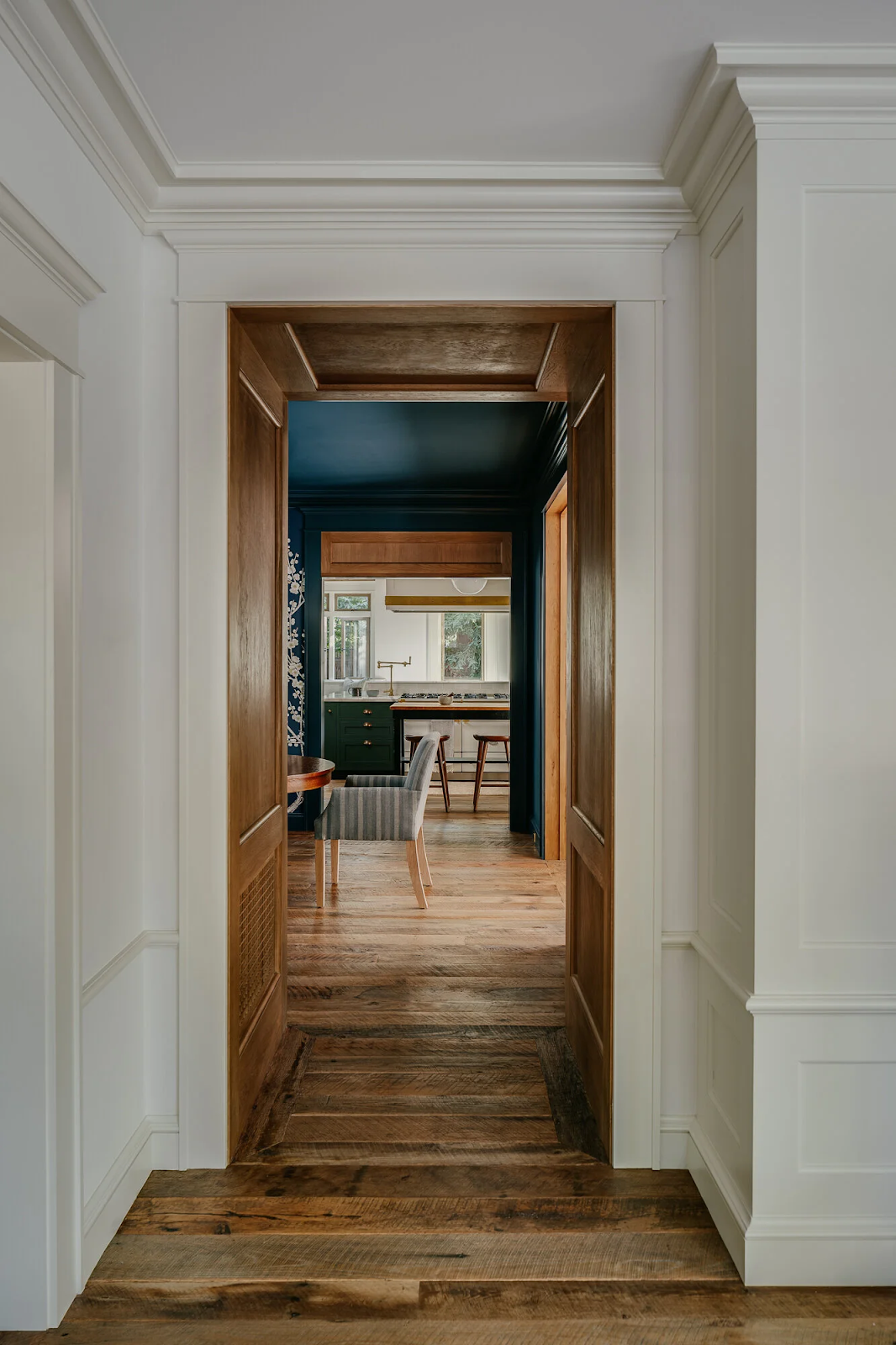
When the centuries-old reclaimed wood flooring arrived for my Palo Alto Craftsman restoration project, I thought I had made the most expensive mistake of my life. The planks looked like someone had pulled them from a crumbling fence. I stood there staring at what appeared to be a pile of weathered, beaten wood and thought, “There’s no way this is going to be a beautiful floor.”
The flooring guys, bless them, just laughed. “No, no — we know what we’re doing. This is going to be fun.”
They were right. What emerged after weeks of careful installation and finishing became one of the most stunning elements of the entire project. But getting there taught me everything I never knew I needed to know about reclaimed wood flooring.
If you’re considering original growth or salvaged wood floors for your home, here’s what I learned on the job so you can approach this material with the respect and preparation it demands. We’ll cover what “original growth” really means, what makes reclaimed wood uniquely challenging, and the practical factors (cost, sourcing, installation, and finish) that determine whether it’s the right fit.
Understanding What You're Actually Getting
Here’s something most people don’t realize: when I say these floors are 200 years old, I’m underestimating. These planks came from trees that were 500 to 600 years old when harvested, meaning the material itself carries close to a thousand years of history.
This is what separates original growth wood from old growth or new growth. Original growth refers to first-generation forests: trees that grew undisturbed for centuries. When Europeans arrived in America, these forests seemed endless, so they were harvested extensively for everything from homes to ships to barns.
The structures built from those trees are now being salvaged as they decay or are demolished. Once this supply is gone, it’s gone forever. Some species, like American Heart Pine, are already functionally unavailable as they once were. That’s the reality of working with a material that can’t be replanted on a human timeline.
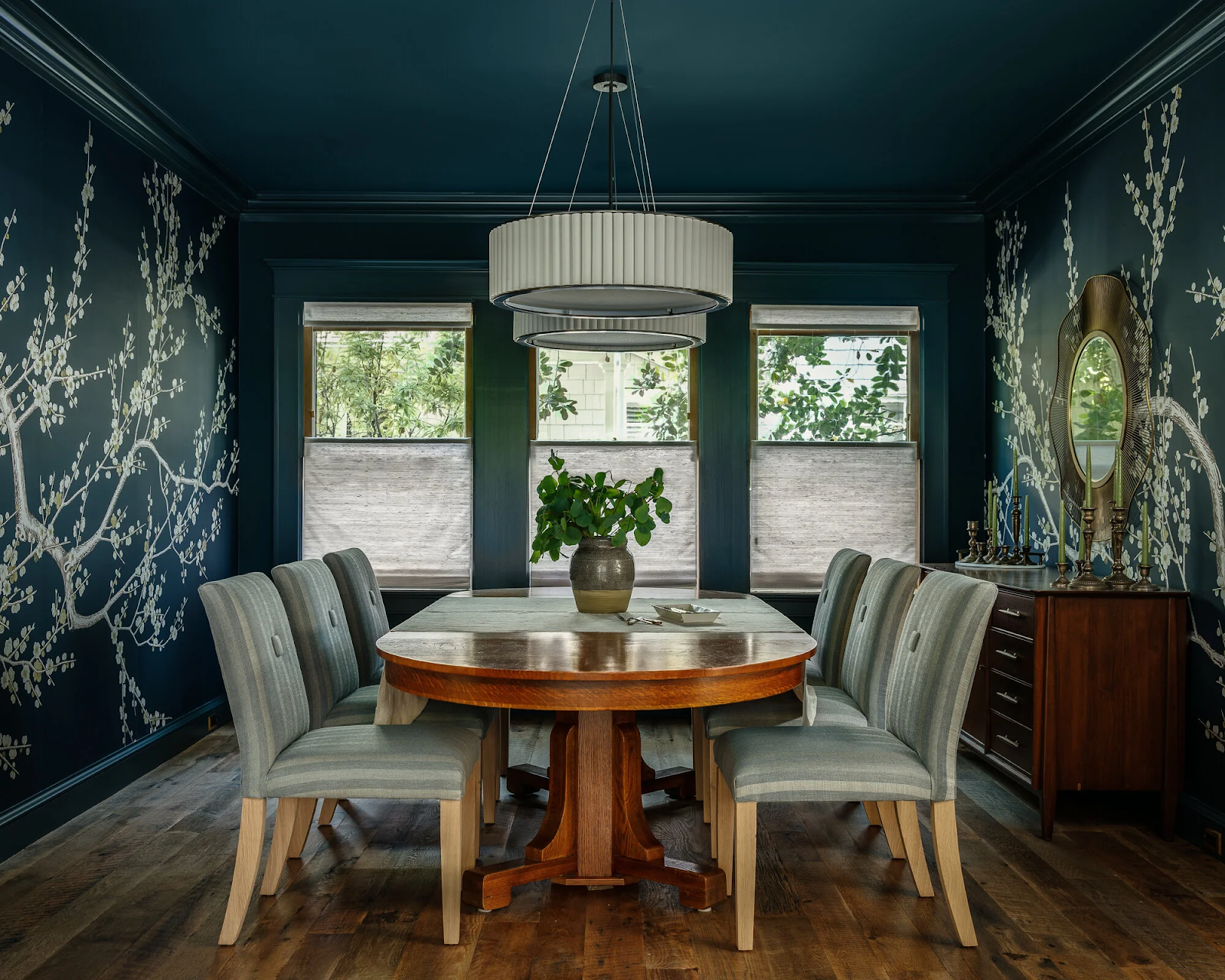
Farrow & Ball Hague Blue walls and a custom hand-painted cherry blossom mural create a sophisticated backdrop for the reclaimed wood flooring. The variation in tone across the planks—a mix of white oak, red oak, and hickory—adds depth and authenticity to this historic restoration.
The Premium That Comes With Scarcity
Original growth reclaimed wood is a premium material for a simple reason: demand has grown while the supply is finite.
A decade ago, reclaimed flooring was still relatively niche; something you sought out when you cared deeply about authenticity and patina. Today, more homeowners, designers, and builders are prioritizing materials with real history. That shift has expanded the market, tightened availability, and raised the bar on sourcing, prep, and installation. You’re not just paying for wood, you’re paying for what it takes to find the right inventory, treat it properly, and install it at a level that honors the material.
Solid vs. Engineered: How the Industry Is Adapting
One of the smartest shifts I’ve seen is the rise of engineered flooring that uses reclaimed wood as the wear layer. Solid planks are still an option, but engineered reclaimed has become a strong choice, especially when the goal is stability and longevity.
It also helps the supply go further: less original material is required per floor, which is one practical way the industry is adapting to scarcity while still delivering the character people want. If you love the look but want a more controlled performance profile (or simply want to be a better steward of a limited resource), engineered can be a great path.
Either way, reclaimed flooring isn’t a default choice for every home or every budget. The real question isn’t whether it’s beautiful. It’s whether you’re ready for the variability (and whether you have the right team to execute it well).
Working With Salvage Companies: What You Need to Know
I found Buckeye Barn Salvage online and spent six months talking with them before I ever placed an order. Six months. We had phone calls where they walked me through how the wood behaves, how to calculate square footage versus linear feet, what kiln-dried means in this context, and how plank width affects cost.
That education mattered because you’re not ordering a product with consistent dimensions and appearance. You’re sourcing material from structures built differently than homes are built today, and the wood arrives with the history to prove it.
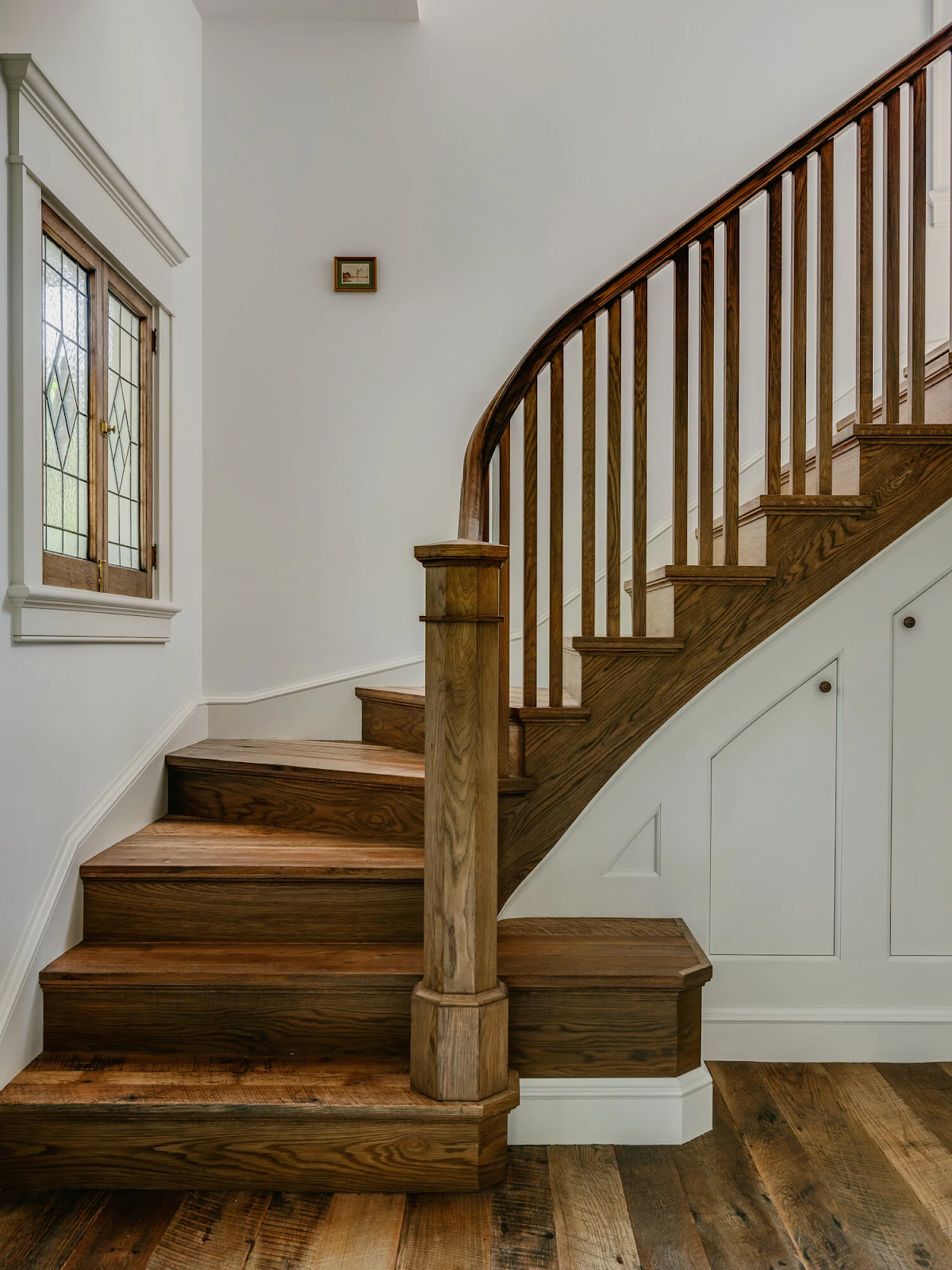
The staircase showcases the reclaimed flooring's versatility, with wide planks revealing the natural variation, visible grain patterns, and weathered character that make original growth wood irreplaceable. Each tread tells a story spanning hundreds of years.
The Technical Details That Matter
Before you commit, here are the realities you need to plan for:
Expect variation — even within a “species.” When you order “white oak,” you’re still going to get variation. Old structures mixed species, and salvage yields what was actually in the building. For the Palo Alto project, the flooring is probably 75% white oak, with red oak and hickory mixed in. It’s authentic to how floors were made in that era and it creates a richer, more complex palette.
Vary widths to save money and increase authenticity. Consistent widths cost more because they require more sorting and selectivity. A controlled range of widths reduces cost and gives the floor a more believable, timeworn feel. We set a minimum width to avoid overly skinny boards, then let the variation do the work.
Kiln drying is non-negotiable. Stability is a bonus. The real reason is protection: the kiln process eliminates excess moisture and kills bugs. You do not want to skip this step.
Nail removal requires specialized equipment. Before the wood can be processed, it must go through a magnetic system that finds and removes nails from its previous life. It’s painstaking, and it’s essential for safe milling, installation, and long-term performance.
Why You Can't Treat This Like Regular Flooring
The biggest lesson I learned is simple: reclaimed wood doesn’t behave like new hardwood. If you want something perfectly clean with no knots, no variation, no patina, no wormholes, well, don’t use reclaimed wood.
It’s like natural stone. If you choose soapstone but can’t embrace scratches and the worn patina it develops, you’ve chosen the wrong material. Reclaimed wood has a history, and it shows up in the final result. The goal is to decide how much of that history you want to reveal.
For this Craftsman restoration, we leaned into the patina, the variation in tone, and the visible life in the planks. On another project with the same client, we’re taking a more refined approach because the architecture and intent are different. The finish is what determines how this wood reads in a space.
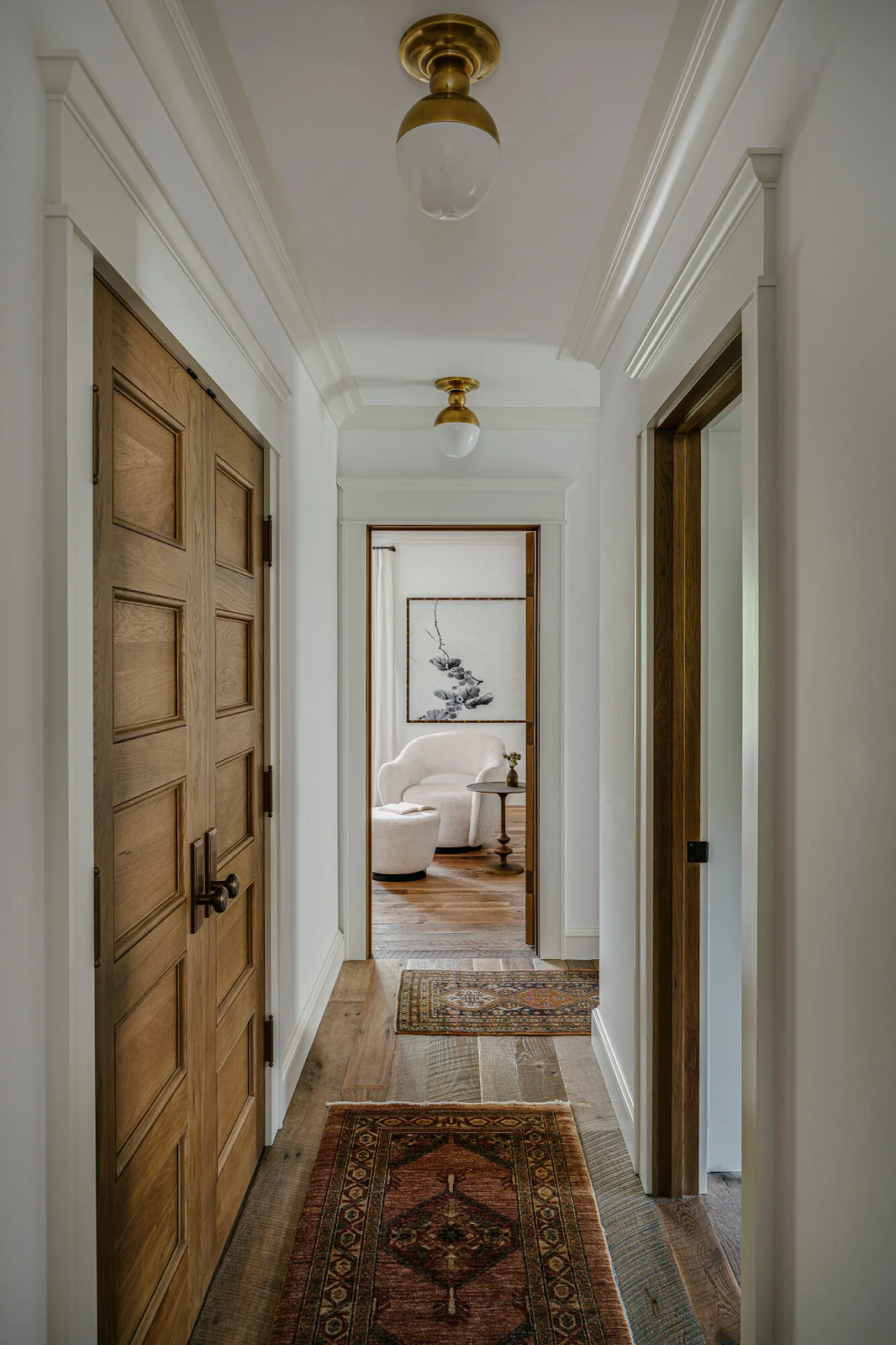
Vintage Persian rugs layer beautifully over the reclaimed flooring, which was custom finished on-site by California Wood Floors after six weeks of stain testing. The final finish balances the rustic, aged quality of the salvaged wood with the refined new millwork.
The Finishing Process: Six Weeks to Find the Right Stain
Almost everything we do is custom finished on site. For a floor like this, I can’t imagine doing prefinished boards. The finishing process is where reclaimed wood goes from “pile of questionable planks” to a coherent, intentional foundation.
For this project, it took six weeks to land on the right stain color before we stained the entire floor. We tested samples, lived with them in the space, watched how they shifted in different light, and adjusted until it felt right.
The final finish, brought to life by California Wood Floors, had to balance the rustic, aged quality of the floor with the refined new woodwork we were installing throughout the home. Holler Architects did beautiful work, taking original profiles from salvaged moldings and creating new millwork that honored the home’s Craftsman heritage. We developed the floor finish so everything would work together, the variation of the old wood grounding the clean precision of the new.
How Reclaimed Floors Create Design Freedom
Here’s something I didn’t fully appreciate until I saw it completed: variation gives you options.
Because reclaimed floors often contain a mix of tones and undertones, you can go warmer or cooler with your furnishings and finishes. You can be formal or relaxed. The floor provides a rich foundation that supports multiple design directions without dictating a single aesthetic.
In the Palo Alto Craftsman, the floors are what convey the restoration's authenticity. Even though they’re technically new to the house, they make the home feel like it’s been there intact for 200 years.
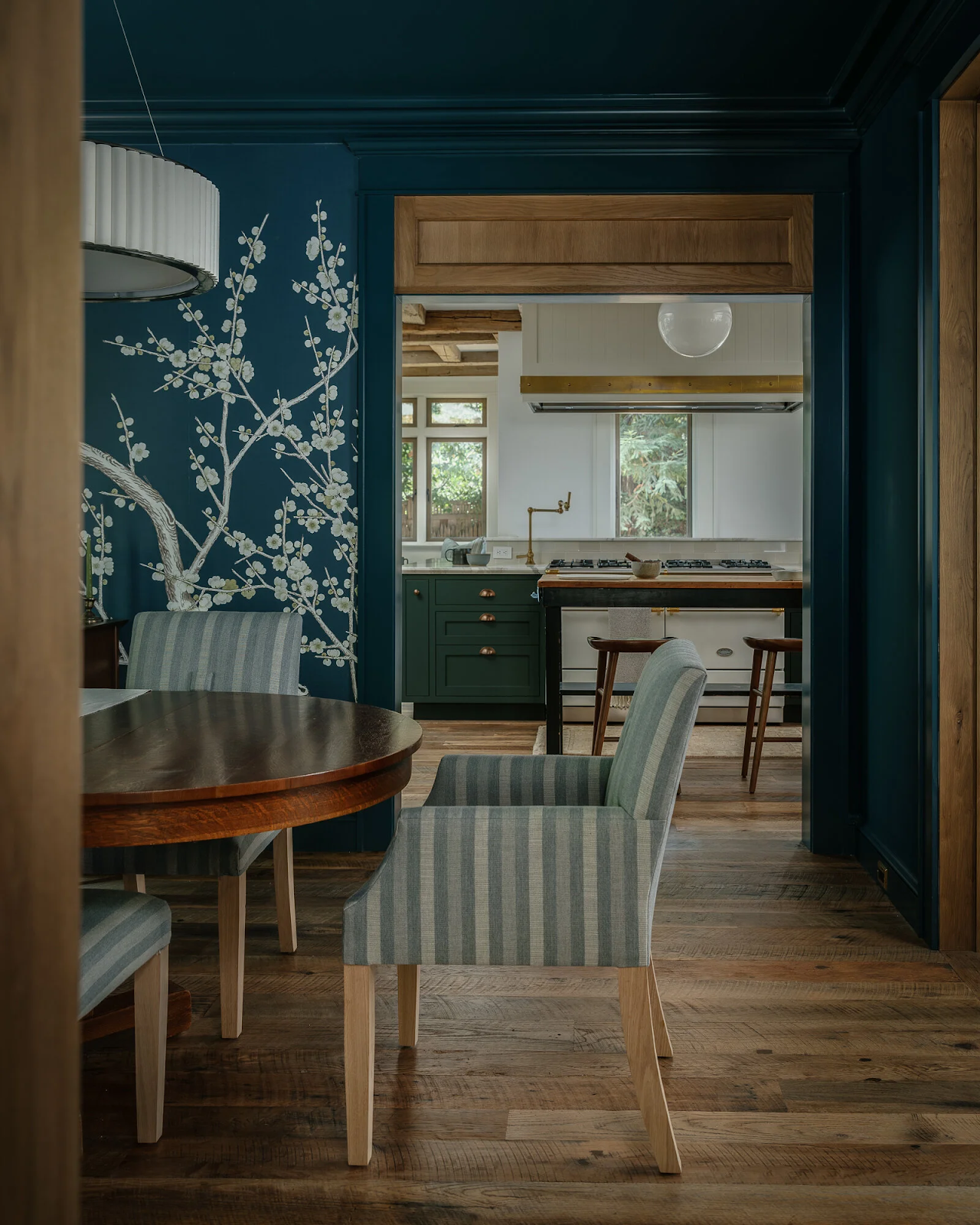
The reclaimed flooring unifies the home's spaces, creating seamless transitions from the Hague Blue dining room through the wood-trimmed doorway to the kitchen. Designed in collaboration with Holler Architects and installed by PGH Contractors, the floor anchors the restoration's blend of historic authenticity and refined craftsmanship.
The Reality of Return on Investment
Reclaimed wood flooring can deliver a real return, but not in the simplistic “it adds X dollars” way people sometimes want. The value is in what it signals: authenticity, craftsmanship, and a level of material quality that’s difficult to replicate.
In the luxury market, those cues matter. Buyers respond to homes that feel grounded in honest materials and thoughtful decision-making, especially when the reclaimed flooring is part of a cohesive, high-level design story.
The important caveat is that reclaimed floors don’t create value in isolation. They amplify value when the rest of the home meets them at the same level. If everything else is builder-grade, the floor can’t carry the result on its own. But when the overall renovation is executed with care, reclaimed wood becomes one of those details people feel immediately.
What Style Homes Work With Reclaimed Flooring?
People tend to assume reclaimed wood is only for historic homes. It’s not.
Yes, it’s a natural fit for period architecture, but the finish determines the vibe. Reclaimed wood can be sanded and finished to read cleaner and more refined, or it can retain more of its rustic patina. I’ve seen salvaged wood work beautifully in contemporary settings and transitional spaces. The key is being intentional about the finish and how it relates to the other materials and the overall design language of the home.
This isn’t a quick decision, and it’s not a budget choice. But for clients who value authenticity, want materials with genuine history, and understand what goes into getting it right, reclaimed wood is extraordinary.
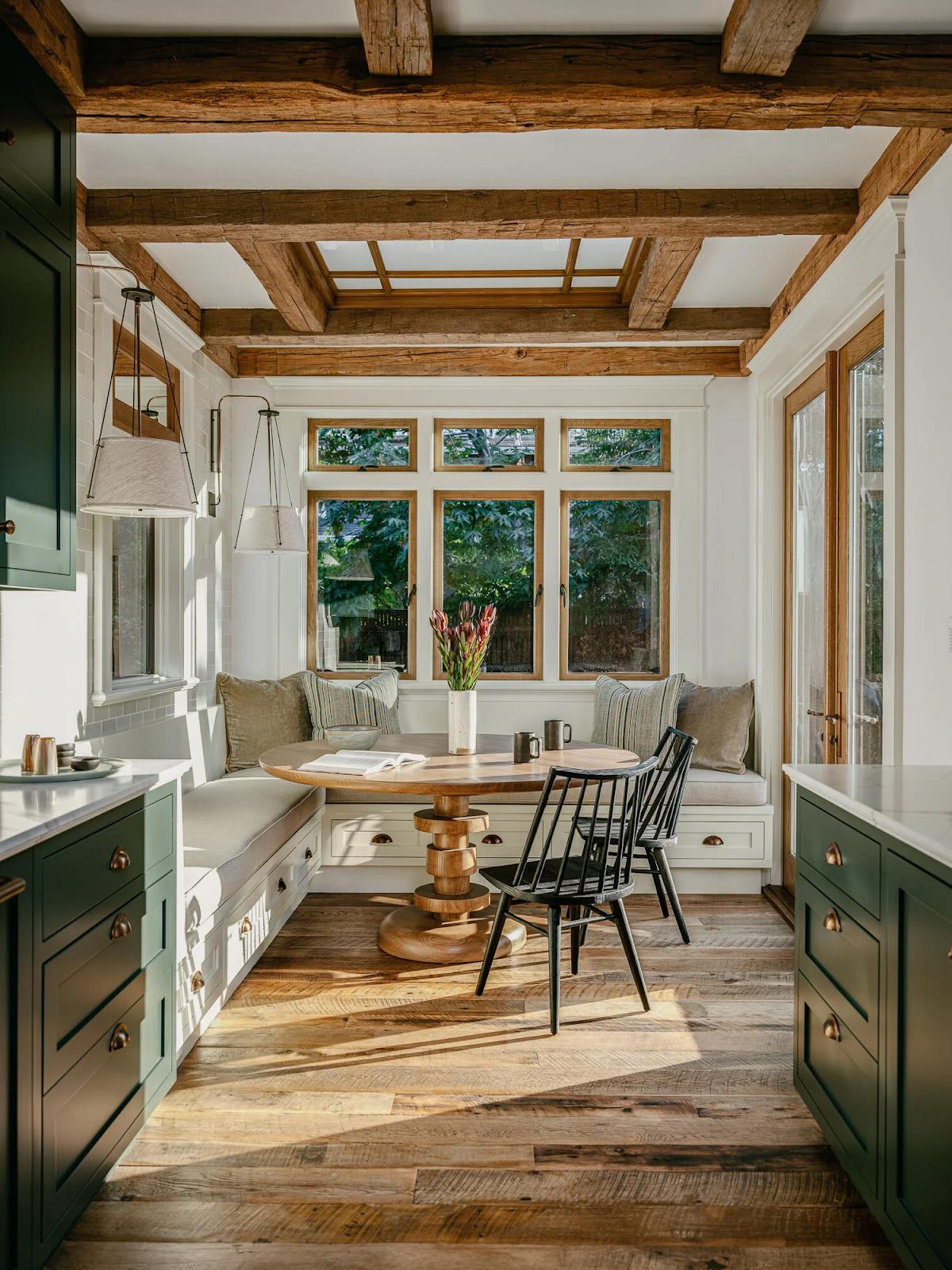
The kitchen's reclaimed flooring includes a controlled range of plank widths—an intentional design choice that reduces cost while adding authentic, period-appropriate variation. The wide planks complement the exposed beams and create visual continuity throughout the open floor plan.
The Floors That Changed How I Think About Materials
These Palo Alto floors changed how I think about materials. They reinforced something I already believed: the most beautiful spaces come from real materials. And the best results often require a level of patience and expertise you can’t shortcut.
Every time I see those floors, I remember that moment of panic when the wood first arrived. I remember the installers reassuring me. I remember the weeks of stain testing and the careful installation process. And I remember the client’s face when she saw the finished result.
Was it worth it? Absolutely. Would I do it again? Ask me after the next project is complete. If you’re considering reclaimed wood flooring for your Bay Area home or a historic restoration project, I’d love to talk with you about whether this approach makes sense for your space, and what it would take to do it well.