How We're Restoring a Historic Spanish Mediterranean Home Without Erasing Its Soul
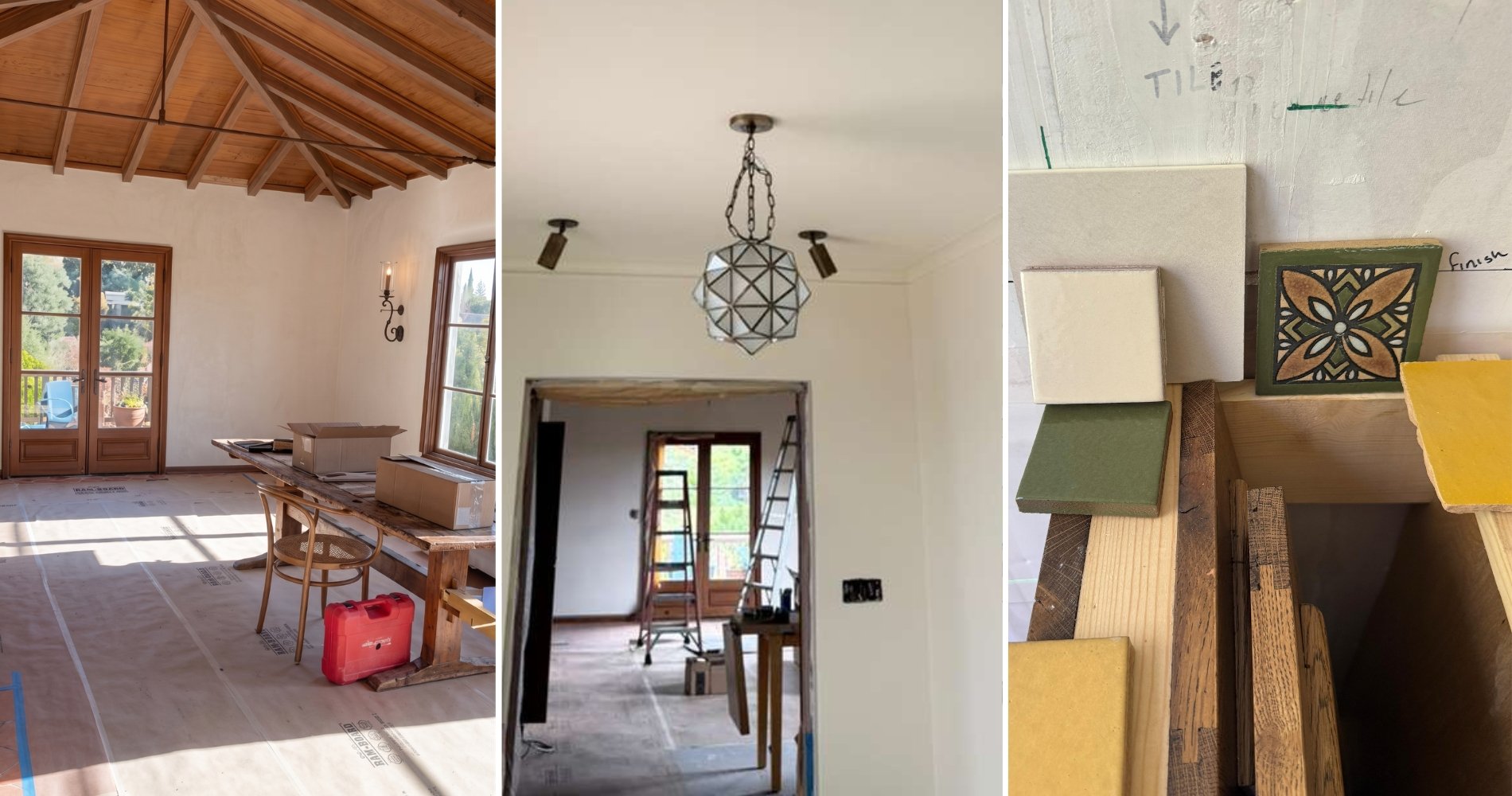
A 1920s Spanish Mediterranean home in the East Bay Hills doesn't ask to be reinvented. It asks to be understood. When we walked into this property for the first time, the woodwork, the ironwork, the plaster ceilings — all of it spoke clearly about what the home was and what it wanted to remain. Our job was to listen carefully, add where function demanded it and leave alone what was already working beautifully.
This historic home renovation in the Bay Area is one of the more layered projects we've taken on. It came to us through a longtime client, someone we've worked with across several homes, each architecturally distinct from the last. “She came to me because she knows I appreciate authenticity, a sense of place and handmade things,” Lane explains. “I have a deep respect for architecture, and I think she trusts the way I approach historic homes."
The property has real pedigree. Designed in the 1920s Spanish Mediterranean style, it was reportedly featured in a publication about its original architect, then maintained for many years by a UC Berkeley architecture professor. It has lemon and orange trees in the back orchard, sweeping views of the bay and, as we discovered quickly, a level of original craftsmanship that simply can't be replicated today. It also had years of deferred maintenance and was ready for a thoughtful update.
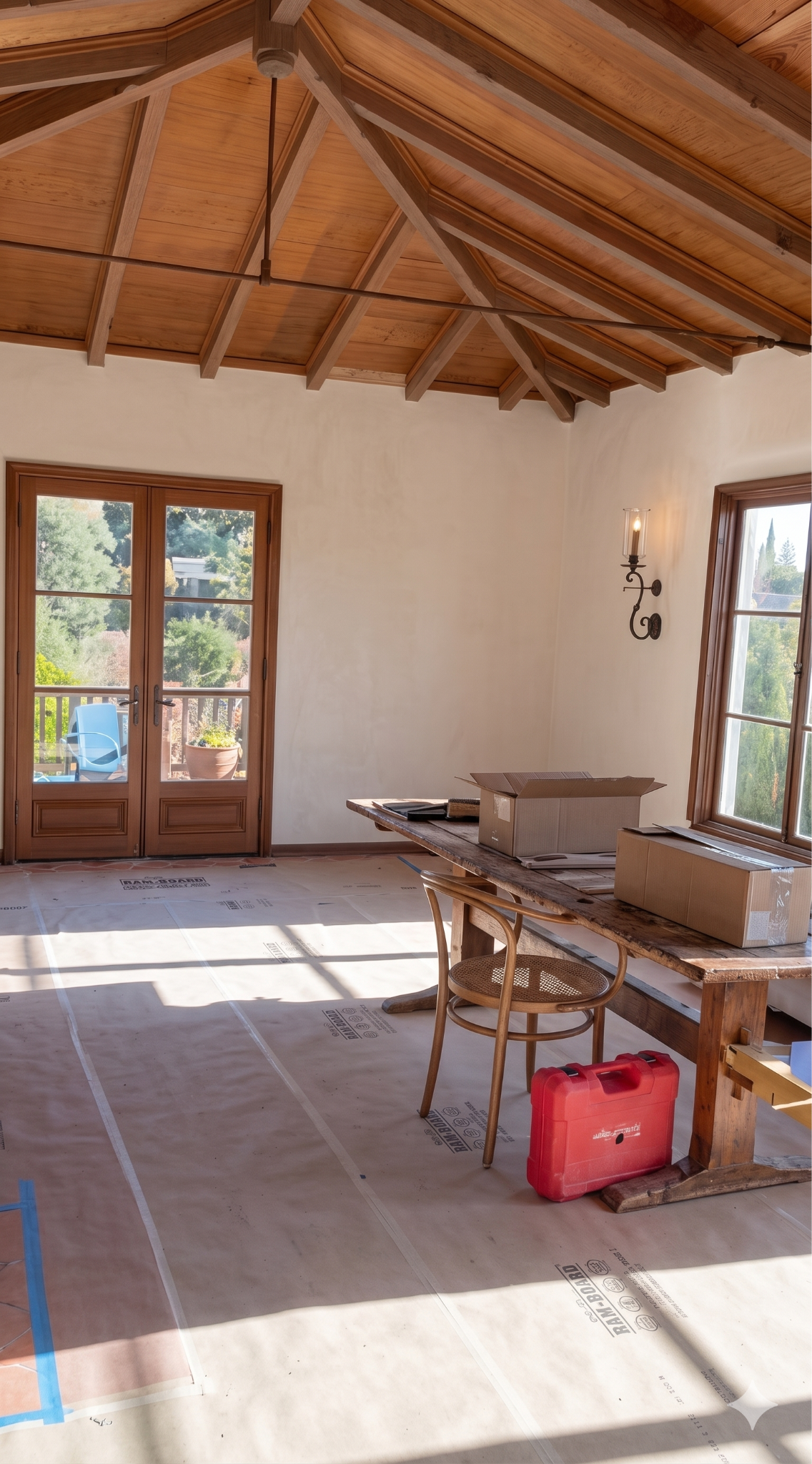
Custom wood ceiling lighting detail in a Spanish Mediterranean-style home during installation.
Adding Lighting to a Wood Ceiling Without Disrupting the Architecture
One of the first things we address in any historic home renovation is lighting, because it's both essential to modern living and potentially ruinous to historic character if approached carelessly.
This home's main room features a stunning wood ceiling with exposed rafter detailing, heavy beams and metal tension trusses that are themselves part of the architectural statement. There was no existing lighting whatsoever. Standard recessed cans were out of the question. Cutting into a ceiling like this would be both structurally invasive and visually wrong.
"We really wanted to add the function of recessed lighting without the modernity of a recessed fixture," Lane explains. "When you have a wood ceiling like this, how do you add functional task lighting to a room?"
Our solution: surface-mounted flush fixtures in an aged brass patina finish, drawing from Moroccan-inspired design traditions that feel native to the Spanish Mediterranean style. They read as intentional rather than retrofitted, providing directional task lighting while sitting comfortably within the architectural language of the home.
The wiring required its own creative solution. In many historic homes with wood ceilings, there's no accessible cavity between the ceiling panels and the roof to run new electrical conduit. We had a backup plan ready.
"The little trim that covers the seam between the beam and the panel offers a wonderful opportunity," Lane notes. "You take it off, run the wire, and then put it back on."
In other words, the original millwork becomes the conduit path when structural access isn't available. It's the kind of solution that only reveals itself when you understand the building well enough to read what it's offering. For any homeowner facing a similar wood ceiling lighting challenge in a historic property, look at what the original builders left you before reaching for a drill.
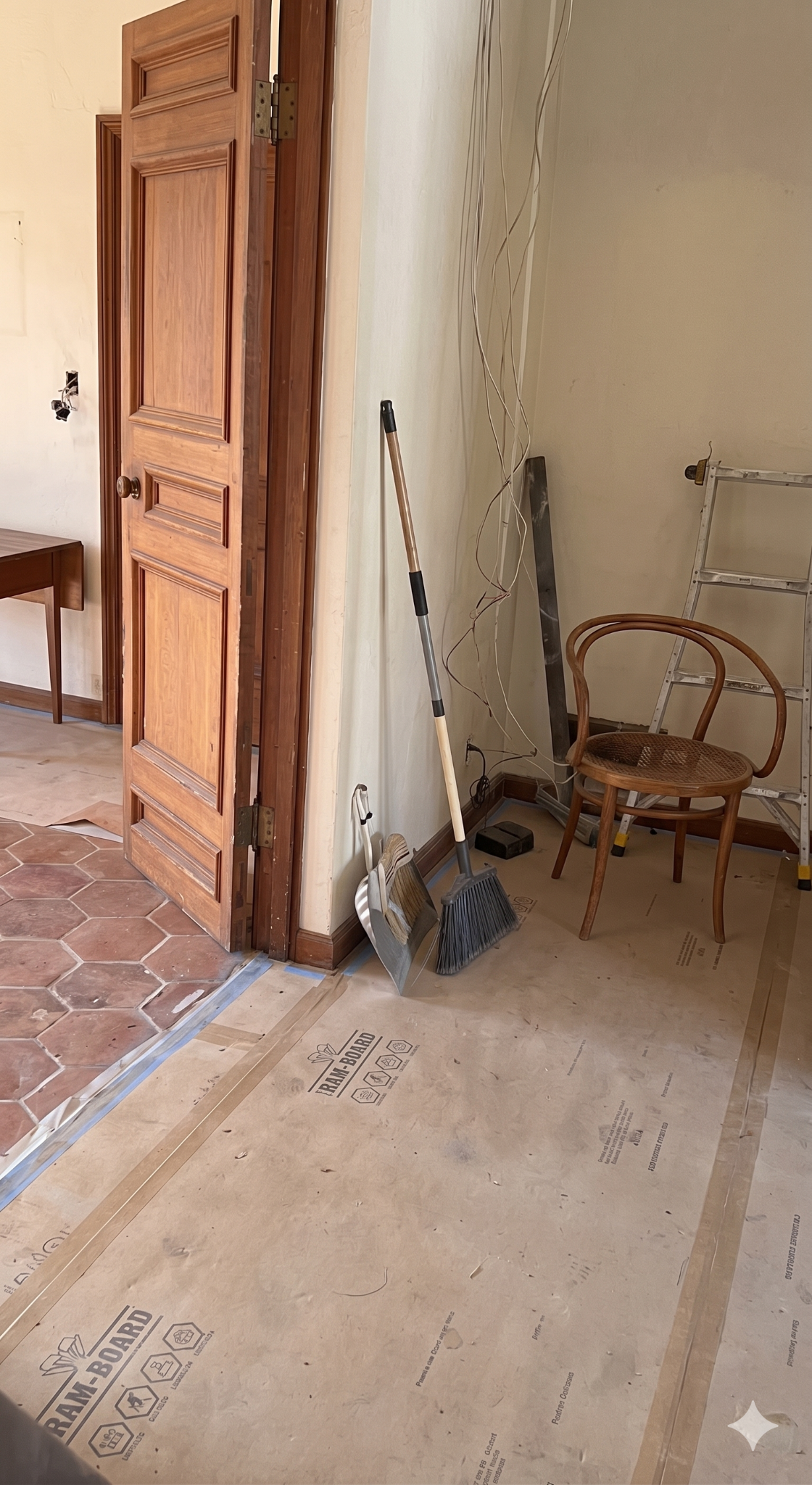
Restored mahogany door.
Restoring the Mahogany Doors: Why Replacement Was Never an Option
Throughout the first floor, a series of solid mahogany doors make an immediate impression. They're thick, richly detailed and surrounded by matching mahogany trim. They are, without question, the kind of architectural element that cannot be replicated with anything available today, and they didn't need to be.
We brought in one of our trusted collaborators, Arana Craftsman Painters, to handle a full mahogany door restoration. The doors were sanded down entirely and refinished, then carefully protected during the ongoing construction process. The window surrounds, which had suffered water damage, were restored as part of the same scope.
"They're just going to be beautiful, such a standout part of the project," Lane says.
Against the warm white wall color planned for the space, the restored mahogany will anchor the entire first floor. This is a consistent principle in our approach to Bay Area historic homes: original millwork in good structural condition is almost always worth restoring rather than replacing. The cost of restoration is typically lower than quality replication, and nothing off a millwork shelf today will carry the character that comes from a century of careful use.
The Fireplace: A Case Study in Restraint
Not every design problem requires a design solution. Some require recognizing there isn't a problem at all.
The living room fireplace is one of the most quietly beautiful elements in the home. A smooth plaster surround that holds its own against all the richness of the surrounding woodwork. It doesn't compete. It anchors.
"This fireplace is such a good example of really good architecture. There's so much happening around the room, and then you have this beautiful, minimal plaster fireplace surround," Lane explains. "We didn't want to touch that."
The homeowners wanted one functional update: a gas insert for heating. We're accommodating that while leaving the surround entirely untouched: no resurfacing, no new tile, no updated profile.
"It's so important in design to know when to be loud and when to be quiet. The complement of all the woodwork detailing with this beautiful simple plaster fireplace surround, it's just what I love."
This kind of restraint is something we return to again and again in preservation interior design. Knowing when not to act is as much a design skill as knowing when to.
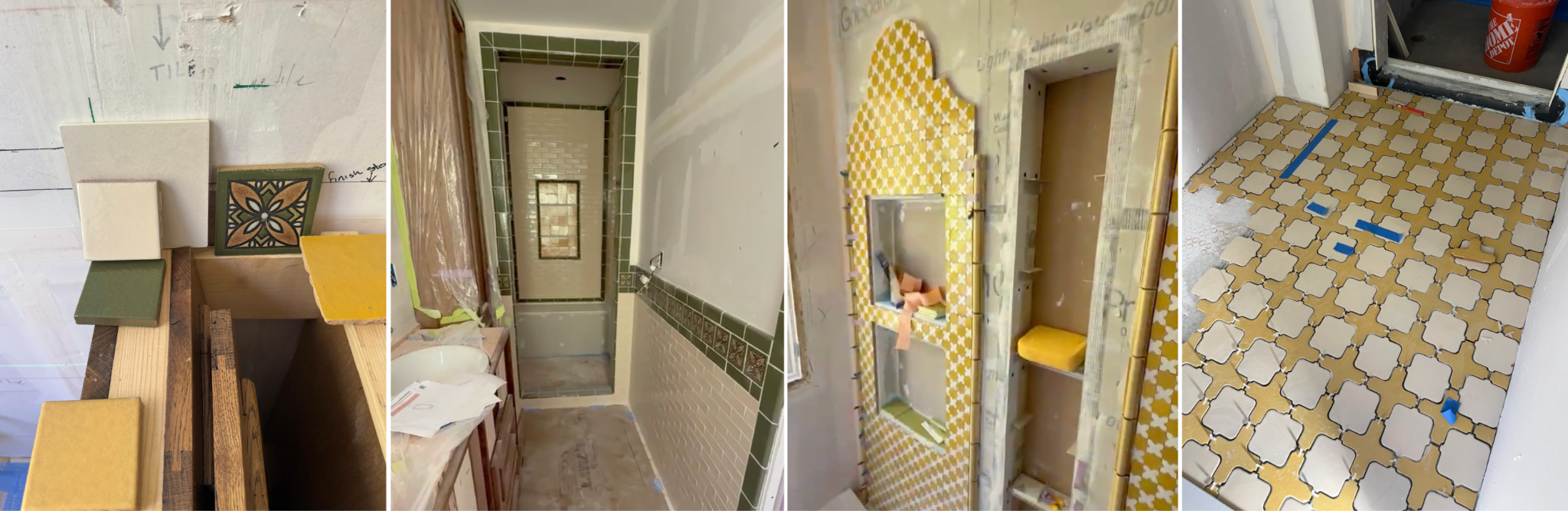
Color and materials inspired by the home’s orchard, bay views, and Spanish Mediterranean architecture.
Color and Materials Rooted in the Home's Surroundings
The color palette for this project was drawn directly from what's already there. The lemon and orange trees in the back orchard. The bay views from the upper floors. The blues are already present in the existing tile.
"A lot of the color inspiration came from the orchard and the views, " Lane says, "The blues in the tile, the bay, the sky.All of that informed the palette.”
The result leans into the warm richness of Spanish Mediterranean color — terracotta, deep reds and earthy greens — while introducing pops of citrus yellow and sky blue that feel grounded in California rather than borrowed from somewhere else. It's a palette that could only belong to this home on this hill.
For tile, handmade was non-negotiable. This is one of the defining characteristics of a Spanish Mediterranean home restoration done well.
"Handmade tile is such an authentic hallmark of this style of home," Lane notes. "It would be incredibly incongruous to bring in clean, machine-cut tile instead of these handmade mosaics."
For the lighting selections, we turned to L'Aviva Home for several Moroccan-inspired flush mounts, The Urban Electric Company for pendants going over the kitchen island (in a pop of green with brass interiors) and deVOL for a ceramic fluted pendant over the kitchen sink. Each fixture was chosen to feel at home in the architecture — contemporary in form, warm in material and rooted in the decorative traditions the home itself draws from.
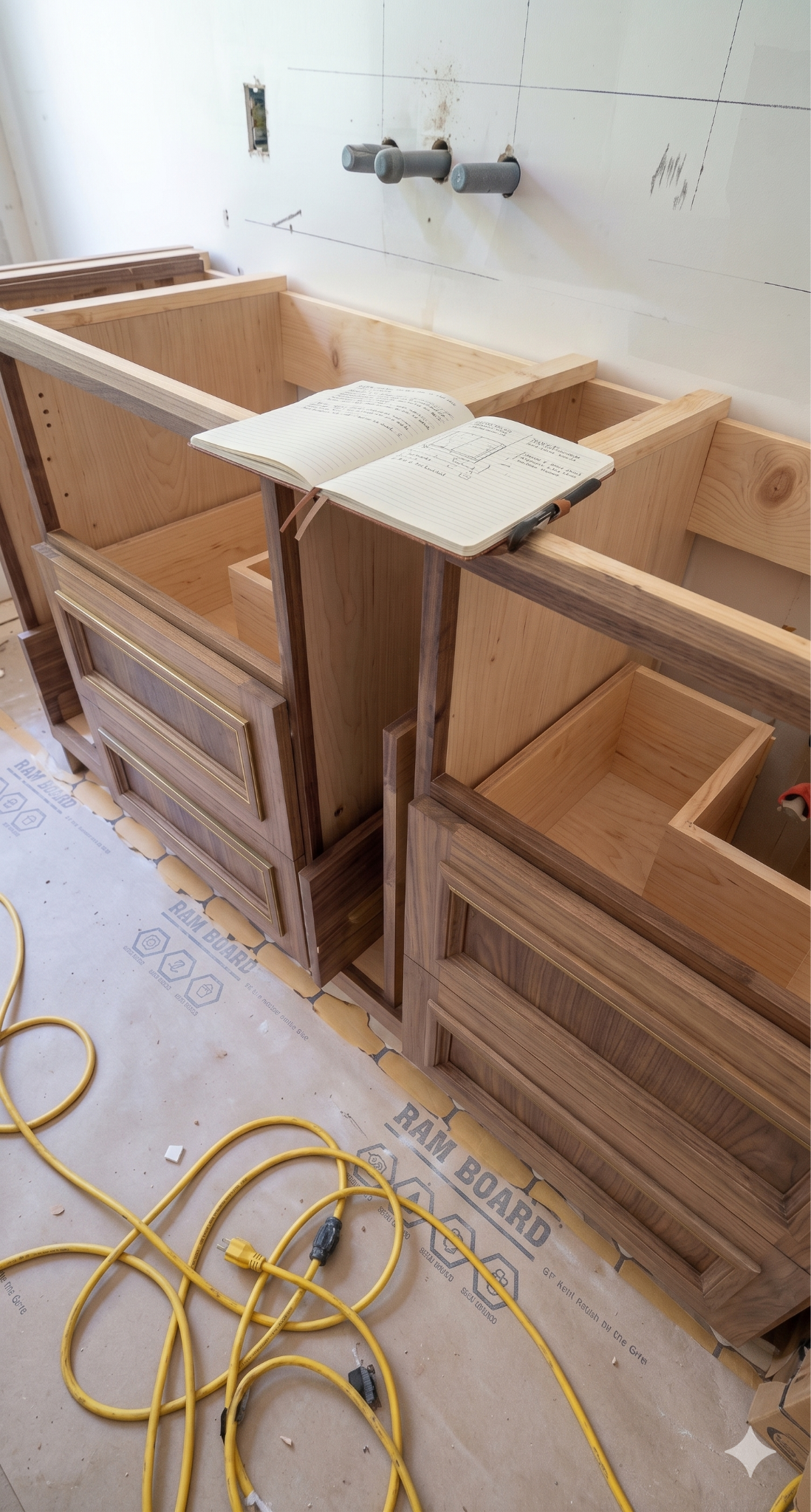
In-progress kitchen cabinetry.
Updating the Kitchen Without Overworking It
The kitchen is an instructive example of how much change is actually necessary in a historic renovation, which is often less than assumed.
Much of what's already in the kitchen was made twenty or thirty years ago and, on closer inspection, is worth keeping. The existing tile backsplash — a loose, colorful arrangement of reds, dark yellows and coral — has a quality that's hard to manufacture intentionally.
"I think it's kind of cool," Lane says. "It's not worth ripping it out."
Instead, we're repainting the cabinetry and reversing the existing color relationship between cabinets and walls, shifting from a neutral cabinet with dark yellow walls to a brighter yellow cabinet against light plaster. We're switching some cabinet doors to drawers for better function, redoing the lighting and updating the island. The butcher block counter from the original island is staying.
The result will feel like a significant refresh while preserving the layered, lived-in quality that distinguishes kitchens in historic homes from those in new construction.
Two Bathrooms from One: A Structural Improvement That Had to Happen
Some updates in this home are less about aesthetics and more about making the home actually function for contemporary living. The upstairs bathroom situation, one shared bath serving all three bedrooms, was a clear example.
Our architect partner, Levitch, designed a solution that divided the original oversized bathroom into two distinct spaces: one accessed from the hallway and one incorporated into the primary suite. Both are small rooms being treated as opportunities — covered floor to ceiling in handmade tile and Tadelakt, the traditional Moroccan waterproof plaster finish.
What We Look for When Approaching a Spanish Mediterranean Renovation
1920s home renovations like this one require a specific kind of literacy, an ability to read what the architecture is saying and respond in kind. When homeowners ask us what to look for in a renovation team, this is where we start.
"If you want to be a good steward of your historic home, look for a design team with real knowledge of historic architecture, one that knows how to work with materials that continue the home's legacy," Lane explains
The signals are in the material choices. A team that defaults to machine-cut large-format tile in a Spanish Mediterranean doesn't understand the building they're working in. A team that reaches for handmade mosaics, aged brass and artisan plaster does. The vocabulary of the home should carry forward, updated where necessary and left intact where it's already right.
"It's very hard to get that right," Lane notes.
A Project Still in Progress
This East Bay Hills Spanish Mediterranean home restoration is still in the construction phase. Textiles, furniture and the full lighting installation are ahead of us. We'll be sharing more as the project comes together — the fixtures going in, the palette fully realized and the handmade tile that's been months in the choosing.
If you're working on a historic home and wondering how to approach it, we'd love to hear about your project.