Timeless Over Trendy: An Interior Designer's Guide to Quality That Lasts Generations
A few years ago, I walked into a loft I'd been hired to transform and did what I always do first: I stood in the middle of the space and just looked.
The staging was fine. It photographed well, actually. There was an industrial pendant, some open shelving, and a sofa in a reliable neutral. Anyone scrolling past it on Instagram might have paused, maybe even saved it. But standing inside it, something felt off in a way I couldn't immediately name. The space wasn't bad. It just wasn't anything. It was a room assembled from the design moment it was purchased in, and that moment had already passed.
My client, a woman in her 50s who had just bought the loft as her own, felt it too. She couldn't articulate exactly what was wrong, but she knew she didn't want to live in someone else's aesthetic. She wanted the space to feel like her.
That's usually where my work actually begins.
I'm Not Anti-Style. I'm Anti-Trend.
There's a cost to trend-driven design that rarely gets discussed honestly.
The obvious one is that trend-driven spaces date. The specific gray-green that dominated kitchen cabinets for three years. The unlacquered brass finish that peaked and now signals a particular era. The open shelving styled with matching ceramic canisters that were everywhere at once and are now everywhere, aging. None of those choices was bad when they were made. But they were made in response to what was visible in feeds and showrooms, not in response to the specific home, the specific client, the specific neighborhood.
The less obvious cost is what you give up when you let the trend decide for you: the chance to build something that actually belongs to your life.
I don't want to force an aesthetic on something. Design is really specific and personal, and when I say personal, it's not just the client. It's the building, it's the neighborhood. It's the evolution of being stewards of the space you're living in.
That's what was missing from that loft. Not a better trend. A point of view.
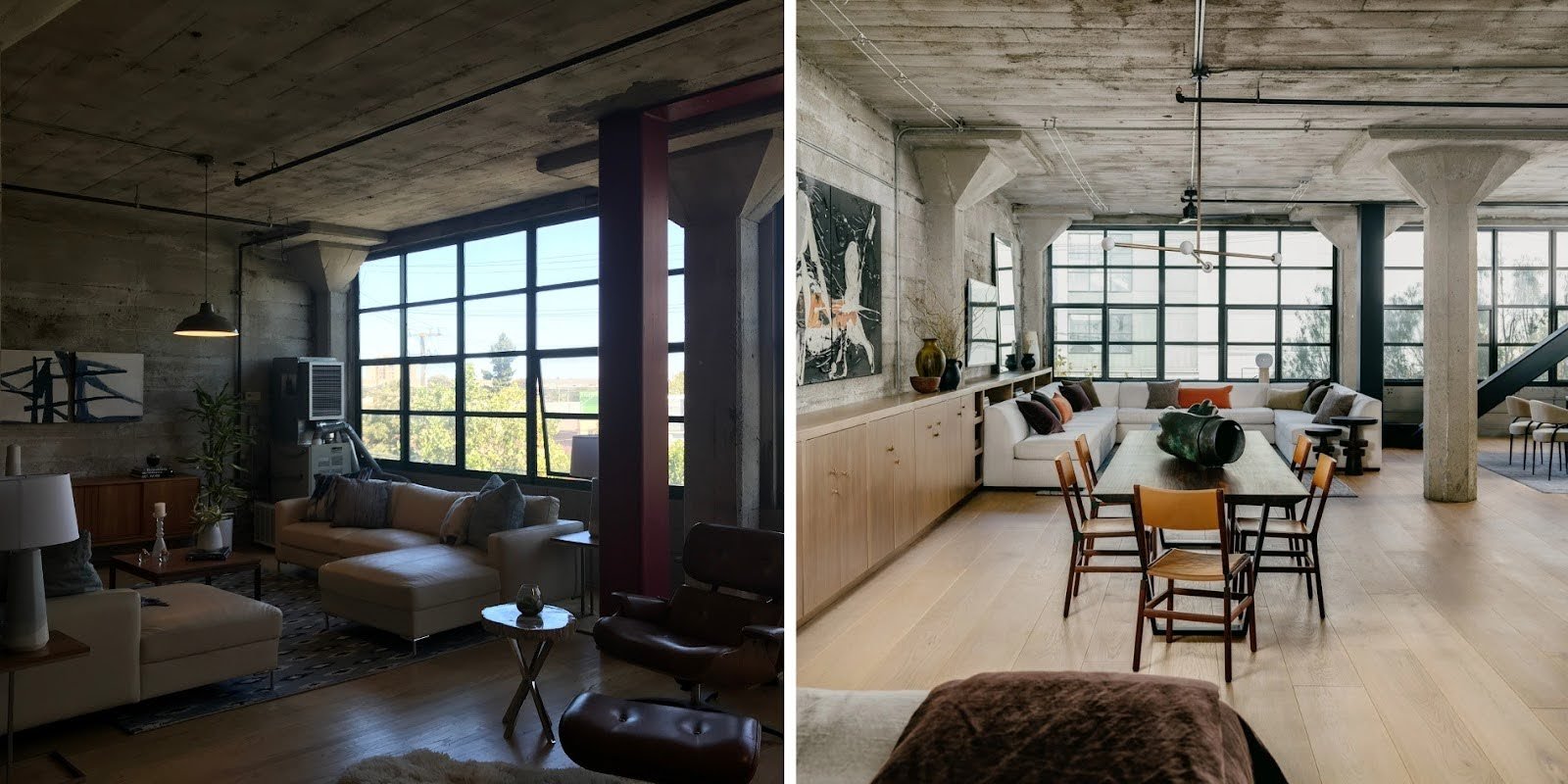
Oakland loft home living room makeover - before and after
What the Loft Actually Taught Me
This is the thing about before-and-after photos that frustrates me: they can flatten the most important part of the story.
The before was a stereotypical early-2000s bro loft. Performative industrialism: lots of aluminum, wire shelving, and mass-market fixtures that looked "modern" in a real estate thumbnail but felt janky and hollow in person. It was a space designed for an audience, not a person.
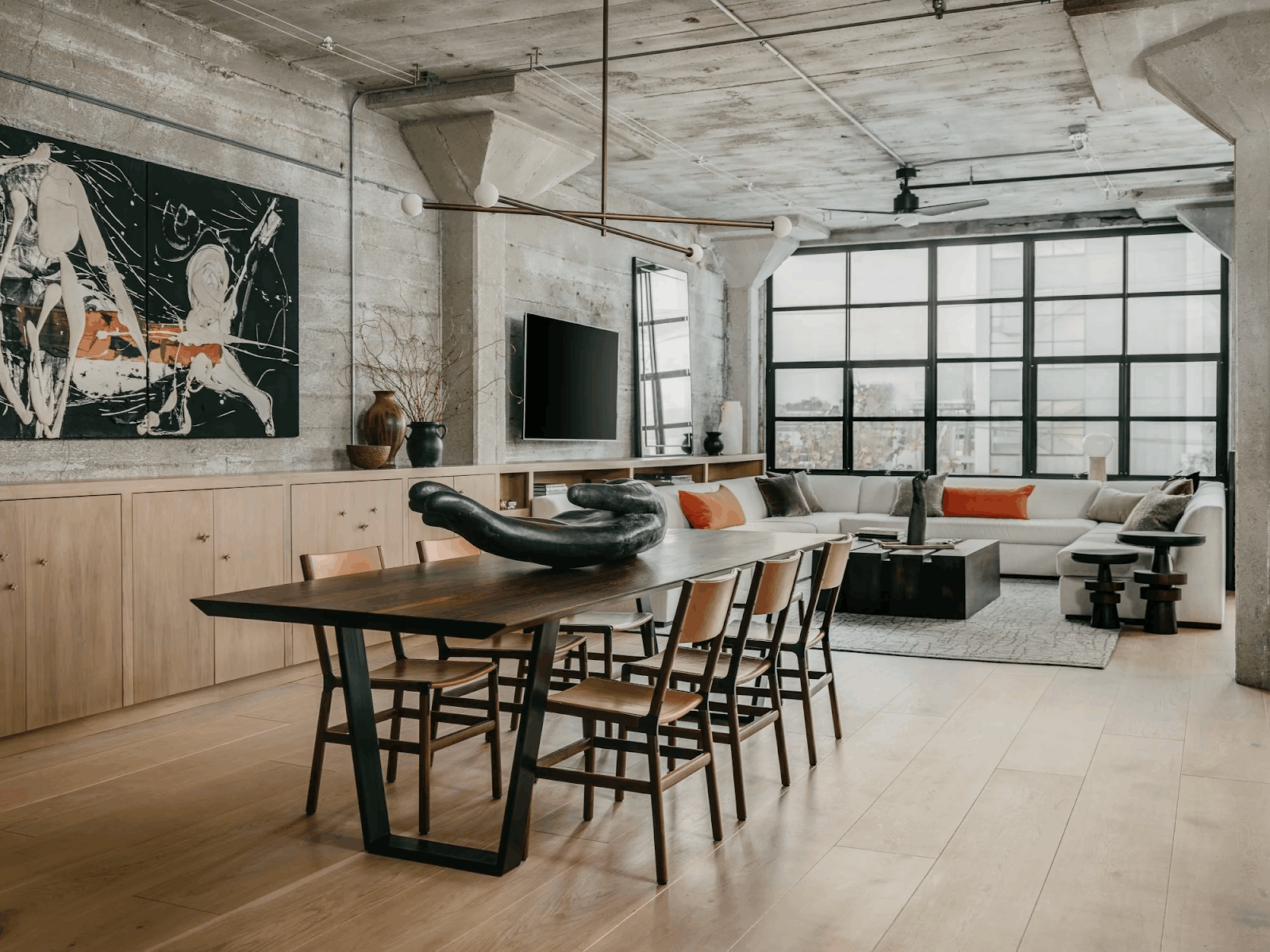
The after is a refined feminine retreat. We didn't just swap the furniture; we changed the visual weight. Twelve-inch planks and custom-designed walnut built-ins moved the space away from the industrial context and toward something settled, intentional, and high-end. The lighting is sourced, not selected. None of it announces itself. It just holds.
When you stand in the finished room, something settles. You feel the quality and the refinement even if you're not consciously cataloguing every detail. It hits you at a visceral level. Whereas the one before had that low-grade unease of a room that's performing rather than being.
You cannot get that from an image. You have to be in it.
That's the argument for timeless home design, in a single project. Not that it looks better in photos. But it feels better to live in, every single day, for years.
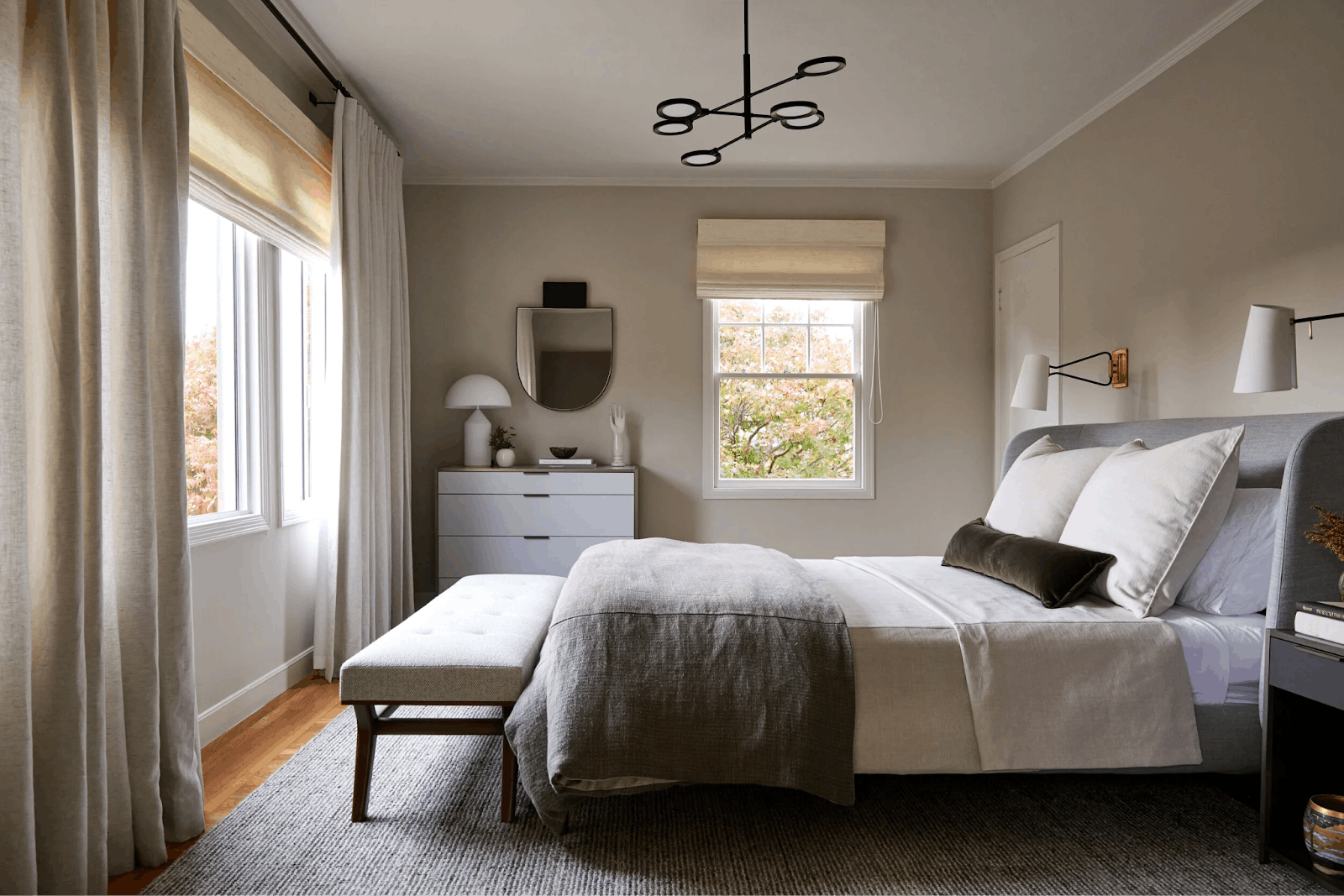
Berkeley Spanish Cottage bedroom featuring intentional lighting and carefully chosen details
Quality at Every Budget (It's Not About Spending More)
Here's where I want to push back on an assumption that follows this conversation around: that anti-trend design is only available to people with unlimited budgets.
It isn't.
What separates a space that feels considered from one that feels assembled isn't always how much was spent. It's the decisions behind what was spent. I've worked on projects with significant budgets that felt generic because every choice was made from a trend board. And I've worked on tighter projects, a budget bathroom renovation or a single room, where the result felt genuinely elevated because the decisions were made with intention.
In the Berkeley Spanish Cottage project, the lighting choices became the clearest expression of this. Rather than defaulting to whatever fixture was trending that season, we sourced pieces from Allied Maker and Urban Electric, studios building on real craft. The fixtures cost more than a comparable mass-market option. But they don't look like a year. They look like they were always meant to be there.
That's the investment worth making. Not the most expensive option. The most intentional one.
For clients working within real constraints, I tend to ask: where will you feel the quality every day? Start there. A doorknob you touch a hundred times, a chair you sit in every evening, a light that greets you every morning — these are the places where the difference between a considered choice and a convenient one shows up in your actual life. Get those right, and everything around them rises.
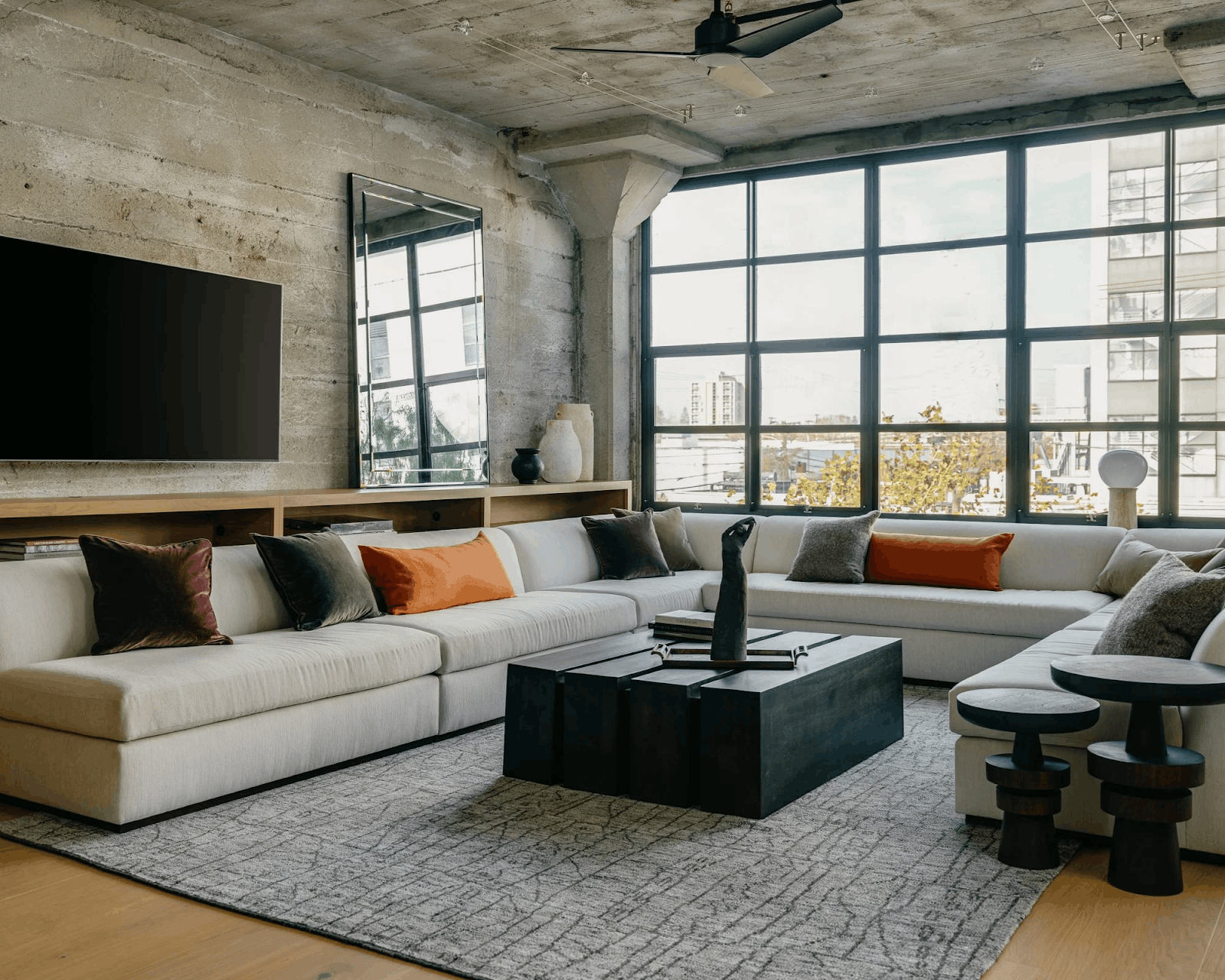
Oakland loft with industrial elements, open layout and modern decor
Why Designer Expertise Changes the Outcome
There's something I tell clients that I think surprises them: interior design isn't primarily about picking beautiful things. Anyone can do that.
It's about understanding how things work together. How a material performs in a specific light condition. How a finish will age. How a proportion relates to the architecture around it. How to source something that actually delivers what it promises.
When I approached the loft transformation, the challenge wasn't finding nicer furniture. It was understanding what the space needed to feel coherent, and what it needed to stop doing. The wide-plank floors weren't chosen because wide-plank floors are having a moment. They were chosen because that loft, with its raw ceiling height and industrial bones, needed something with enough visual weight to ground the room. The custom walnut built-ins weren't chosen because walnut is trending. They were chosen because the client's collection of books and objects deserved a structure that could hold them with real intention.
That kind of decision-making isn't something a trend board provides. It comes from years of understanding how spaces actually work, and from caring enough to slow down and figure it out rather than defaulting to what's popular.
This is also why I've never had a consistent aesthetic across my portfolio. I'm not interested in imposing a signature look on every project. The work should look like the client and the home, not like me.
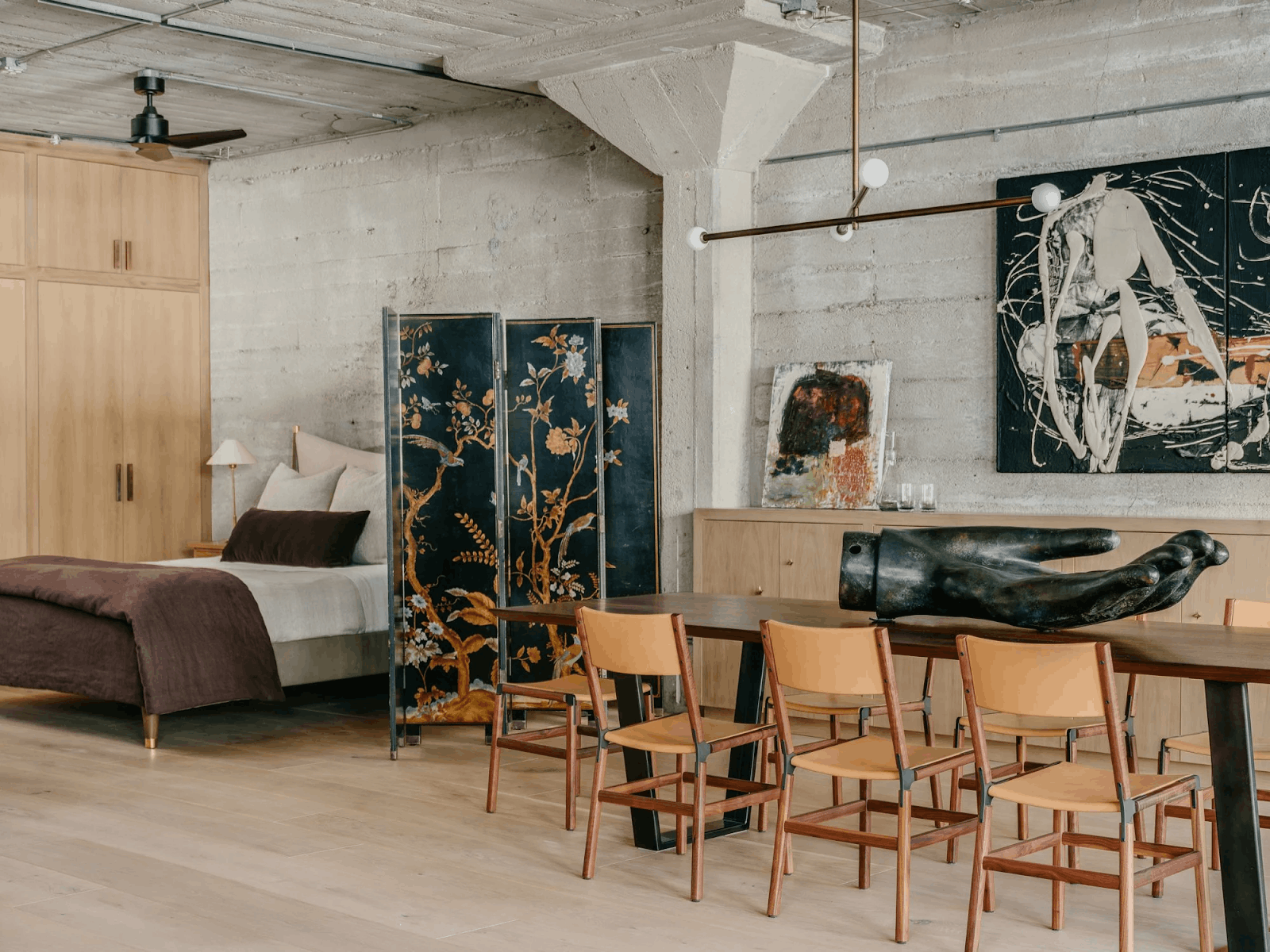
Open loft layout featuring bedroom and dining areas
Authenticity Is the New Luxury
Something is shifting in how sophisticated design is read right now, and I think it has implications for anyone making long-term decisions about their home.
For years, having the right aesthetic — the right trending tile, the right curated moment — was enough to signal taste. Now, with those aesthetics reproducible by anyone with a design app and a willing contractor, what signals real discernment is something that can't be replicated: genuine material quality, installation craft, a design rooted in a specific place and a specific life rather than assembled from a shared visual vocabulary.
I notice this in conversations with clients. There's a growing wariness about spaces that feel generated rather than designed. People are increasingly aware, even if they can't always name it, of the difference between a room that looks good and a room that actually feels right.
What I'm working toward is something deeper than just another pretty room: spaces that support how people actually live, that carry the weight of real materials and real decisions, and that don't ask to be updated in three years because they were never built for a moment in the first place.
The Guild by LMI furniture collection comes from this same thinking. The pieces aren't designed to trend. They're designed to be sculptural enough to hold their own, durable enough to last, and specific enough to feel like a real choice rather than a default. In a space where the architecture is striking, the furniture needs to be able to meet it. These pieces do that without trying to compete.
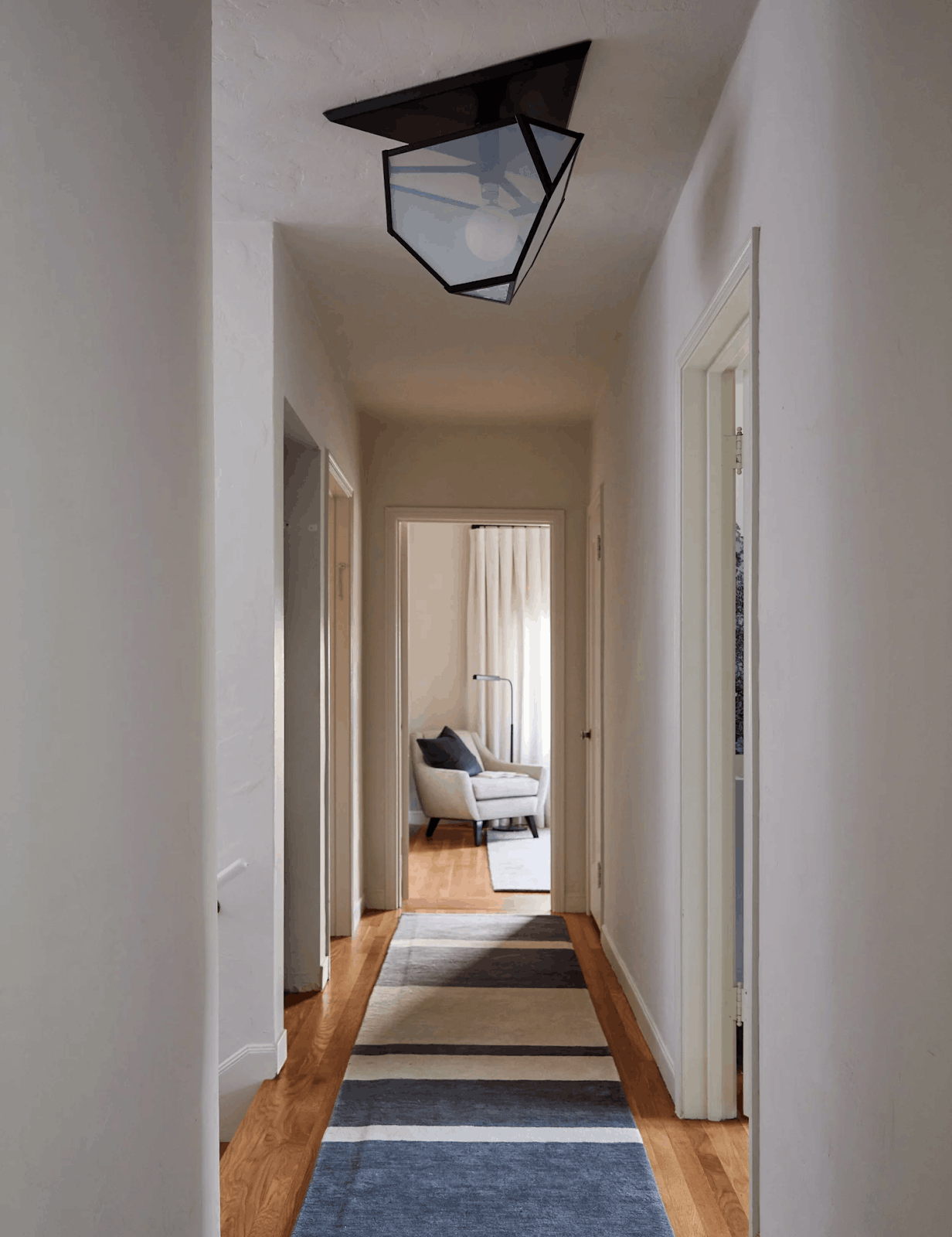
Berkeley Spanish Cottage hallway designed with intentional lighting and a textured rug
The Question I Come Back To
Before any material or furniture decision on a project, I ask myself one question: Is this choice driven by what I've been seeing, or by what genuinely suits this space?
The two sometimes overlap. But slowing down enough to find out which one is leading makes all the difference.
The homes I'm most proud of don't look like a particular moment in design. The loft that finally felt like the woman who lived in it. The Spanish Cottage, where the lighting choices still feel exactly right years later. The spaces where clients tell me they still love it — not because it's still current, but because it was never trying to be.
That's always what I'm working toward. And it's available at more budgets, in more homes and in more design contexts than people assume — as long as the decisions behind it are made with genuine intention rather than borrowed from someone else's moment.