Why the Best Renovations Don't Look Like Renovations - Renovation vs. Restoration
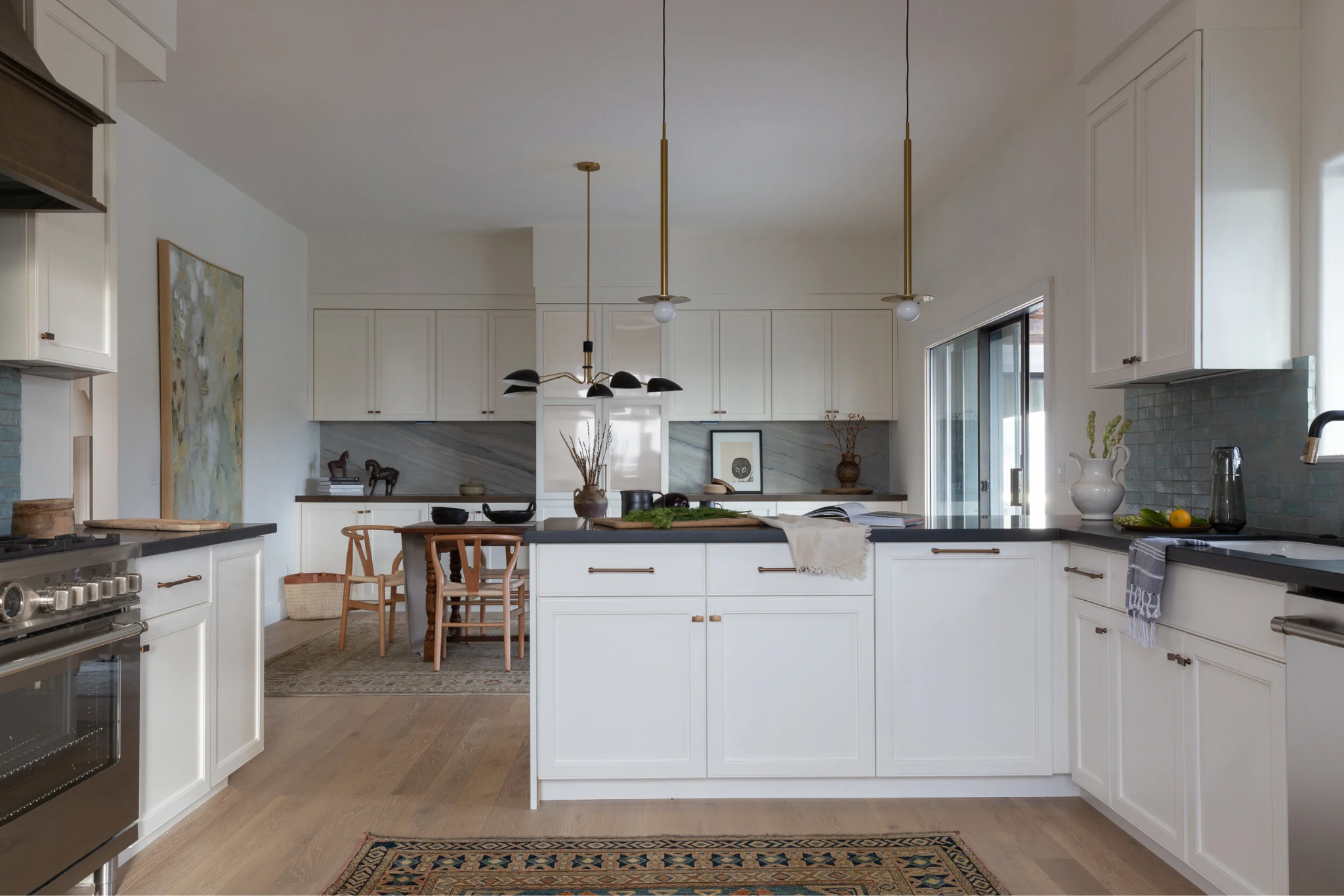
Historic homes often come with a tension between what should be preserved and what a family needs from the house today. On a recent South Bay Craftsman project, that meant adding something the original home never had: a large vaulted great room combining the kitchen, dining area and media sitting space.
The house was designed by a noted architect of the early 1900s, but additions made over the decades had gradually moved away from the character and quality of the original design. That made the project less about simply preserving what was there and more about deciding where to restore, where to renovate, and how to make a new addition feel connected to the original architecture.
What's the Difference Between Renovation and Restoration?
A restoration returns a home to its original quality and, often, its original architectural intent. A renovation updates a home for how people live now, whether the original construction ever met that quality standard. Most Bay Area historic-home projects use both, in different rooms, for different reasons.
We treat that distinction as a spectrum rather than a fork in the road. Some rooms in a historic home ask to be restored: original woodwork, moldings, window openings, the bones that already have integrity and just need care. Other rooms, especially kitchens and bathrooms, were rarely built to any standard that makes sense for how a family lives today, so those spaces call for renovation, even inside a restoration-minded project. What we hold constant across both is quality. Our renovations meet the same craft standard as our restorations. They just aren't always dictated by historical reference, even though we're weighing that reference the entire time.
A restoration usually costs more than a less custom, dictated renovation, because you're paying for craftspeople instead of mass-produced, off-the-shelf goods, along with the expertise, time and detailing of a good design team. The cost most homeowners underestimate isn't material, it's time: getting a historic project right takes real time in the design and iteration process.
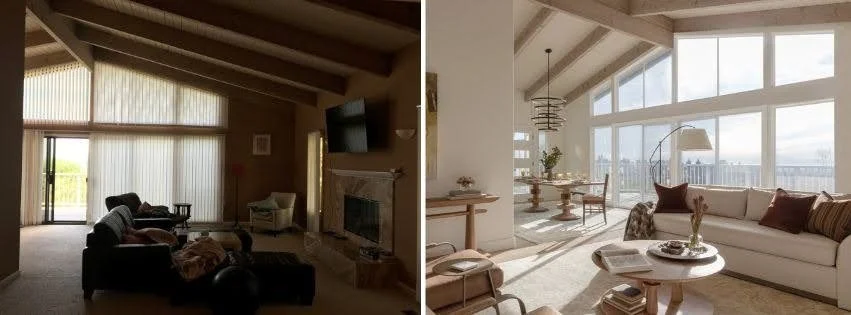
A before-and-after look at how thoughtful renovation can transform a dated vaulted living room without erasing its bones.
Preserving Character During Renovation
Original millwork, moldings, floors and window openings anchor a room even after every system and finish around them has been fully modernized. Preserving character during renovation starts there: deciding what stays untouched before deciding what changes.
Craftsman millwork can run heavy and dark, but there are ways of lightening and brightening it that don't require paint, and painted woodwork is so hard to undo once it's done. We've never actually painted an original, unpainted piece of woodwork. We don't want to be the ones who take a piece of woodwork that's survived a hundred-plus years to a point where it can't be returned, and it's usually quite possible to avoid that. Restoring the wood so it brightens and freshens almost always gives a more interesting result, with far more depth than a fresh coat of paint would.
Where we do let go is in the rooms that were never built for how anyone lives now. Craftsman-era kitchens and bathrooms weren't designed for today’s version of daily life, so we bring those spaces into a more luxurious modern experience while still maintaining the authenticity of the home's original architectural choices.
In our Historic Oakland Refresh project, that meant a fully modern kitchen sitting right next to woodwork we'd spent months restoring rather than replacing.
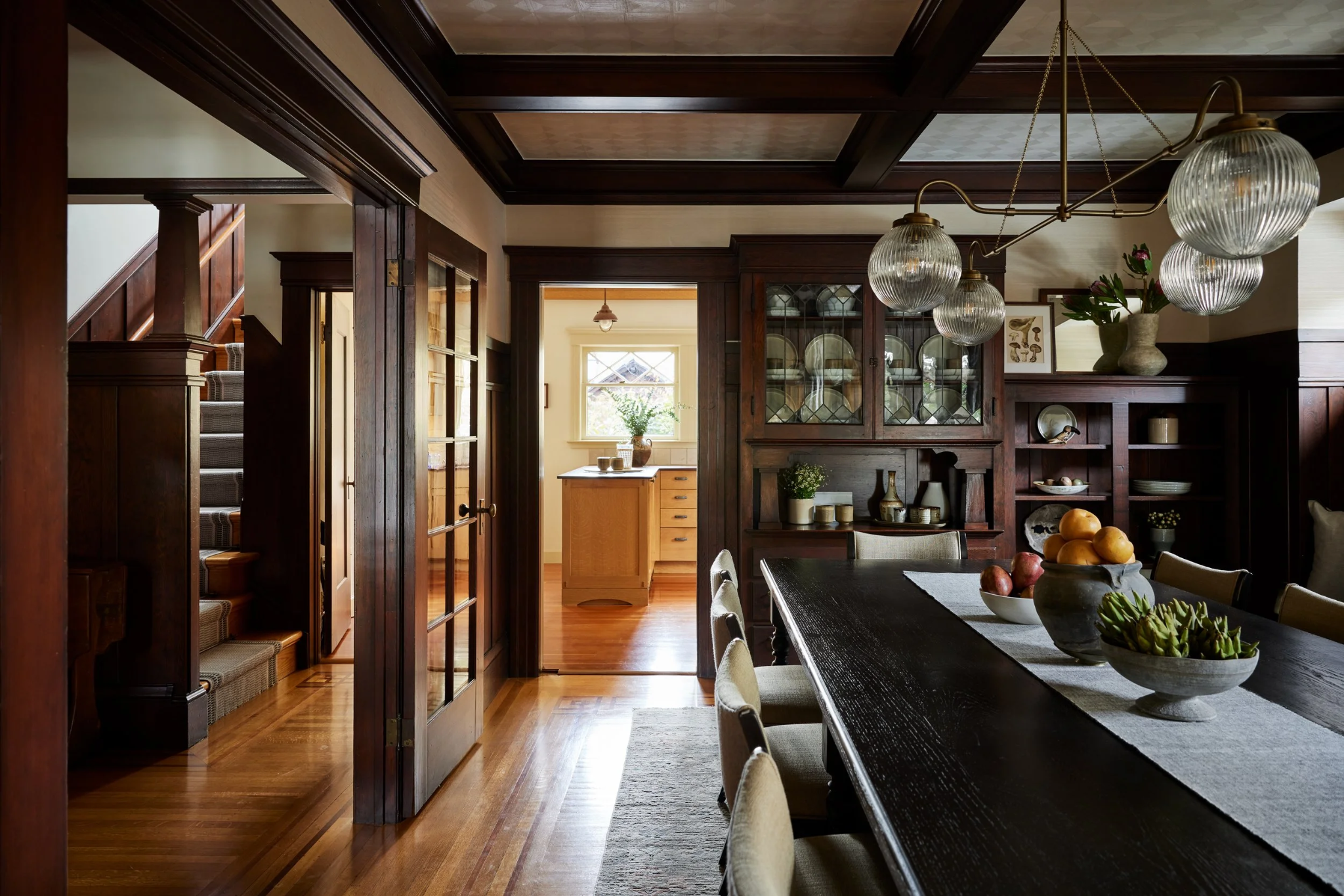
Original millwork and a built-in hutch, restored rather than painted, anchor this Craftsman dining room.
Inventing a History That Never Happened
Back to our recent South Bay Craftsman project. There was no version of this house's actual history that included a vaulted room for cooking and entertaining, so instead of forcing a modern addition onto an old shell, we built a story the house could have lived.
We started with reference images — projects and historic homes from that era, the kind a craftsman architect working in 1910 would have known well. Craftsman architects Greene and Greene's work, the broader canon of Pasadena craftsman houses, a lodge like Torrey Pines: the kind of scale and weight those projects carried. We built a story around them: this had never been a simple seasonal cottage, but a winter home meant for entertaining across every season, which meant it always needed a grand working kitchen with the weight of the projects we were referencing. Since we were treating it as a home built for entertaining, and the Bay Area's weather cooperates most of the year, we pictured it almost like an indoor-outdoor garden entertaining space too, which gave us the reasoning for decorative craftsman doors and workmanship throughout the room. And that logic is what guided the millwork, tying the new space back into the home's original public rooms.
Every notable craftsman architect of that era worked this way, developing one theme and varying it room by room like a piece of music returning to its melody. We used the same logic here. Once you have the story right, the addition stops feeling like an addition. Get the narrative wrong and it shows up in the little things, a room that has the right materials but the wrong reason for existing.
We got proof of concept on another historic project we had been working on. We'd been taking a lattice pattern from an original deck railing and repeating it throughout the home, first as a truss in the great room, then as a ceiling treatment in the dining room, then worked into a redesign of the exterior doors — the same way period architects varied a single theme room by room. Partway through demo, we found that same pattern built into the house decades earlier, hidden under a later renovation that had been slapped up over it. The original architect had already done exactly what we were doing. It was an exciting find, and it told us we were on the right track.
When the Wish List Fights the House
Character and comfort don't always pull in the same direction, and historic preservation and a modern wish list can seem to be in conflict.
We worked with a couple whose historic home had all of its original woodwork intact, which was exactly what had drawn them to the house. But living inside it, they were struggling. The dark wood and heavy furniture throughout made the whole home feel oppressive rather than cozy. Their instinct was to sell rather than touch anything; if they were going to redo the house, why buy a historic one at all.
What changed their mind wasn't reassurance, it was specifics: walking through exactly which architectural references we intended to protect and exactly which ones we felt comfortable shifting into a more contemporary colorway or pattern, room by room, until the plan itself became the reason to believe it could work. The house ended up feeling lighter, brighter and inviting, without losing the details that made them fall in love with it in the first place. That project earned enough trust that the same client brought us back, twice.
That's the real answer to "historic preservation vs modernization": it's rarely an either-or once you get specific about which details are load-bearing to the home's character and which ones are just habit.
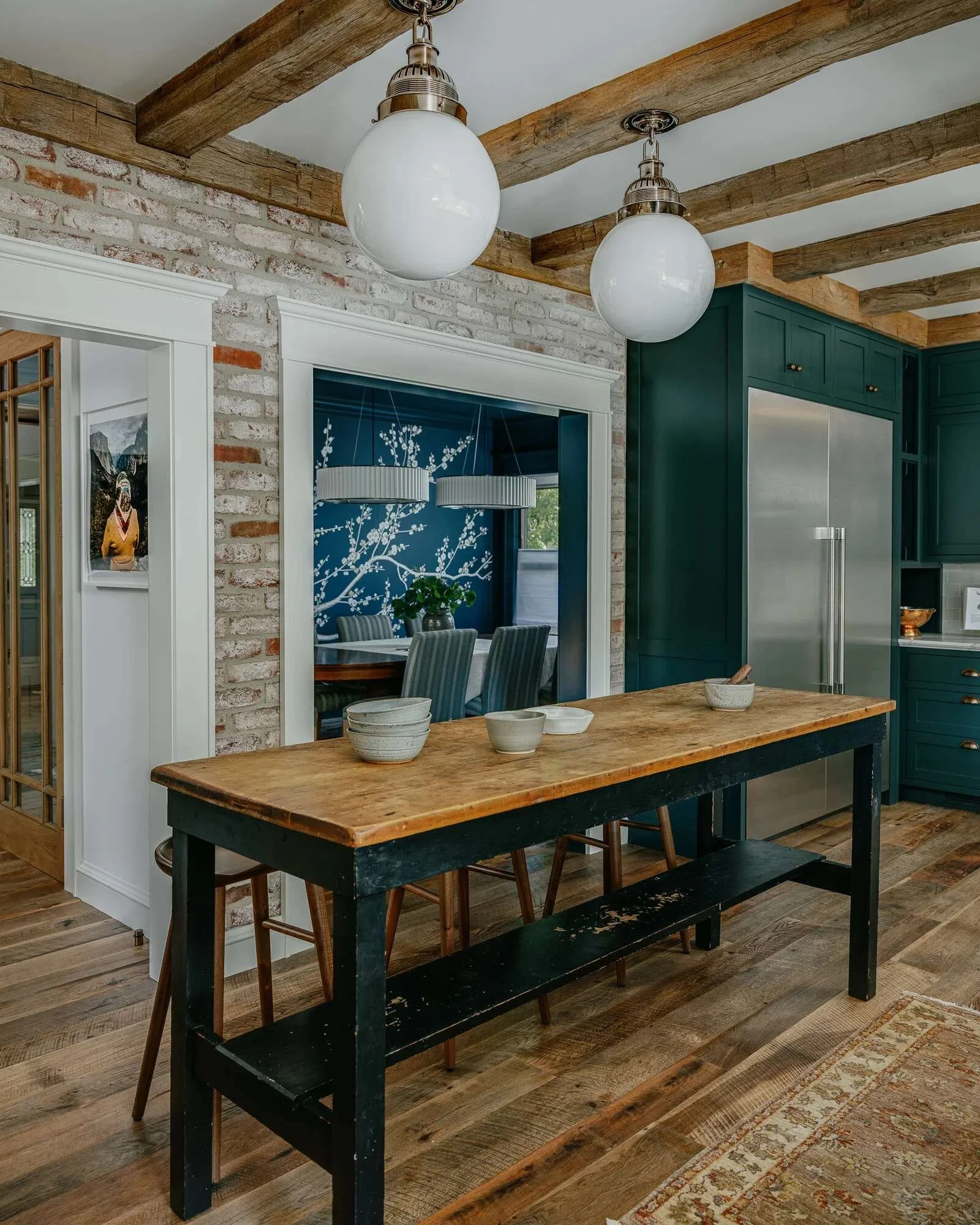
The new vaulted great room in Lane McNab's South Bay Craftsman project, designed to feel like it belonged to the home's original architecture.
What We Almost Never Let You Remove
What gives away a bad renovation in the first ten seconds has almost nothing to do with the big changes and almost everything to do with details like wood tone, wood species and finish quality. A close second is millwork that references a style without understanding it, a split-panel shaker cabinet is sometimes called craftsman style, but it's really just a detail slapped onto a cabinet as if someone wrote "craftsman" across the top, with no real integration into the home's architecture. Inauthentic metal finishes give a room away just as fast. Go with solid materials for any metal finish, or it becomes the giveaway.
If you're choosing between a designer who understands the deeper architectural references behind a style and a vendor selling semi-custom pieces that simply borrow the label, that choice is where a renovation either earns its place in the house or doesn't. High-quality modern lighting follows the same logic. We don't insist on period fixtures in every historic home, but we do look for pieces with real craft and intention behind them. You can see that approach in our Palo Alto Craftsman project, where handcrafted modern lighting sits against original woodwork rather than fighting it. That same instinct shows up in the custom pieces we build through GUILD by LMI.
Before Any Walls Come Down
Whether your home needs a restoration, a renovation or some blend of both, the details worth protecting are usually the ones you'd miss most if they disappeared. We'd rather help you figure out which is which before any walls come down than after, not once the demo dumpster is already in the driveway.
Reach out to schedule a consultation for your historic home renovation or addition, and let's talk about what your house is asking for.
Frequently Asked Questions
-
It depends on scope. A straightforward renovation can cost less than a full restoration but restoring to real historical accuracy often runs higher due to specialty materials, sourcing and skilled labor, so compare project scope before comparing price tags.
-
Usually, yes, though requirements vary by city and by whether the property carries a historic designation. Confirm specifics with your local planning department before finalizing scope, since rules differ block by block in some Bay Area cities.
-
Age is the starting point, generally 50 years or more, combined with neighborhood or architectural register designation. A local historic preservation office or a designer familiar with your area can confirm your home's actual status quickly.